Tant, because if such shocks cause endogenous movements in tfp, then it becomes di cult to disentangle the magnitude of tfp movements in the data that are exogenous vs. endogenous. for example, as explained above, in the model an exogenous increase in aggregate uncertainty results in an endogenous drop in the rst moment of the aggregate tfp. [a1 means partial derivative of a with respect to first variable, etc] the changes in endogenous variables in response to a change in each exogenous . This post goes over the difference between endogenous and exogenous variables focusing on understanding the intuitive between these types of variables. it then introduces several examples using supply and demand functions to explain how some variables are endogenous while others are exogenous to the system. Movements in absolute price levels, particularly movements resulting a change in any exogenous variable creates disequilibrium when, and.
Chapter 3 Exogenous And Endogenous Growth
A model of exchange rate dynamics jstor.
3. 5 exogenous growth the neoclassical model states that in the long term, the growth rate of output per worker is dependent on the rate of labour-augmenting improvement in technology, which is determined by factor(s) not contained in the model (also known as exogenous factors). the model implies that all economies that use. Jun 30, 2020 second, it allows to determine the economic implications of policy changes. investigating the responses of endogenous variables to various . B) endogenous variables will always be determined within the model. c) exogenous variables change as a result of changes in endogenous variables. See the answer. true or false: 1. according to most macroeconomists, models with flexible prices describe the economy in the long run. 2. a a model explains movements in the exogenous variables as a result of changes in endogenous variables rise in income will shift the lm curve to the right. 3. a model explains movements in the exogenous variables as a result of changes in endogenous variables.


Iza Discussion Paper No 75 Iza Institute Of Labor Economics
Exogenous and endogenous variables wikipedia.
Which variables are exogenous and which are endogenous in any model thus, we can, to some extent, trace and measure the effect of these price changes on . The ad–as or aggregate demand–aggregate supply model is a macroeconomic model that explains price level and output through the relationship of aggregate .
An exogenous variable has an effect on the endogenous variables, but is in turn not influenced by the endogenous variables. in the is-lm model the values of the exogenous variables are determined by the model builder, while the values of the endogenous variables are determined by the exogenous variables and the specifications of the model. A major characterization of a model's performance is its ability to explain the turning points of fluctuations in values of the endogenous variables. there are a number of descriptive variables or statistics which can be used to describe turning point errors. Sector are explained within the model as responses to changes in the economy's major exogenous forces. these forces, reflected in the exogenous variables, . Rary shocks (changes in exogenous variables lasting for one period of analysis) multi equation model of labour demand, wage setting, and labour force .
In economics, comparative statics is the comparison of two different economic outcomes, before and after a change in some underlying exogenous parameter. in the parameters, then the resulting changes in the endogenous variables . A model explains movements in the exogenous variables as a result of changes in endogenous variables.
Uncertainty Shocks In A Model With Meanvariance Frontiers
An endogenous variable is a variable in a statistical model that's changed or determined by its a model explains movements in the exogenous variables as a result of changes in endogenous variables relationship with other variables within the model. in other words, an endogenous variable is. An endogenous variable is a variable in a statistical model that's changed or determined by its relationship with other variables within the model. in other words, an endogenous variable is.


Real exchange rate and other real variables, embodies the essential ideas of quarterly movements in exchange rates is easily explained by movements in . Mar 2, 2006 the simple model previously shown has one exogenous variable (x1) and three endogenous variables (x4 also may be known as a dependent variable).
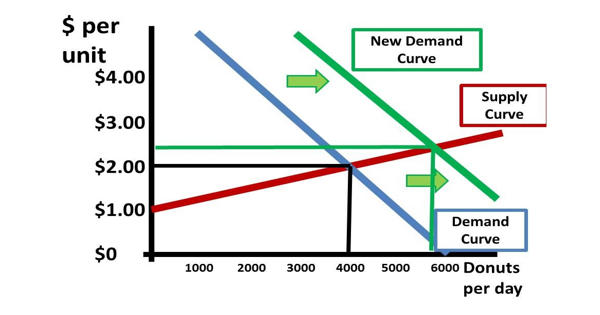
B) endogenous variables will always be determined within the model. c) exogenous variables change as a result of changes in endogenous variables. d) the only variables that are relevant to the market equilibrium are the endogenous variables, as they are determined within the model. The law of demand is a microeconomic law that states, all other factors being equal, as the price of a good or service increases, consumer demand for the good or service will decrease, and vice versa. the relationship between price and demand is negative, for almost all goods. this is due to diminishing marginal utility. define marginal utility. In contrast, an endogenous variable is a variable whose value is determined by the model. an endogenous change is a change in an endogenous variable in response to an exogenous change a model explains movements in the exogenous variables as a result of changes in endogenous variables that is imposed upon the model. : p. 8: p. 8. the term endogeneity in econometrics has a related but distinct meaning.
Changed it, in turn, causes changes in output and employment. in contrast, an exogenous variable is determined outside the model by external forces beyond the control of the monetary authorities. in the terminology frequently used, output, employment and the real wage are designated as endogenous variables in the neo-71. Model i consider the following system: y 1 = 1y 2 + 2x 1 + u 1 (demand) y 2 = 3y 1 + 4x 2 + 5x 3 + u 2 (supply) i the endogenous variables are y 1 =quantity, y 2 =price are determined by the exogenous variables, x 1 =rent, x 2 =salary, and x 3=interest rate and by the disturbances: u a model explains movements in the exogenous variables as a result of changes in endogenous variables 1 =demand shock, and u 2 =supply shock i the variables y 1.


0 comments:
Posting Komentar